Showing posts with label Interview. Show all posts

Friday, July 24, 2020

New Release & Interview with Lee Murray: Grotesque: Monster Stories by Lee Murray (Horror Anthology)


Collection; 261 pages

horror, thriller, adventure, monster, short stories

Things in the Well http://www.thingsinthewell.com/

ISBN 9798611527153

http://mybook.to/Grotesque


Three-time Bram Stoker Award® nominee Lee Murray delivers her debut collection, and it is monstrous. Inspired by the mythology of Europe, China, and her beloved Aotearoa-New Zealand, Murray twists and subverts ancient themes, stitching new creatures from blood and bone, hiding them in soft forest mists and dark subterranean prisons. In this volume, construction workers uncover a hidden tunnel, soldiers wander, lost after a skirmish, and a dead girl yearns for company. Featuring eleven uncanny tales of automatons, zombies, golems, and dragons, and including the Taine McKenna adventure Into the Clouded SkyGrotesque: Monster Stories breathes new life into the monster genre.


Interview

RIU: Hi, Lee! Welcome to Rising Indies United. Please tell us a little bit about yourself. 


Thank you for having me over, Shannon. I’m an award-winning writer and editor from New Zealand. 


RIU: Your new release is Grotesque: Monster Stories. Can you tell us some of the things that influenced you to write these short stories? 


When my publisher at Things in the Well, Australia, first approached me about putting together a collection, I didn’t think I was quite ready. After all, I’d only been writing for a decade. It was way too soon. But later, when the earworm had worked its way into my brain, I sat down and read through some of my favourite stories to see if there were any consistent themes or ideas. And I discovered a lot of monster stories in my backlist. So I chose a range of them, wrote some fresh ones, and brought them together to create Grotesque: Monster Stories. Inspired by places, legends, conversations, some of the tales in this collection are of the ‘humans-as-monsters’ kind, and others are the ‘monsters-as-metaphor’ kind. Some are the slower creeping kind, and others are breakneck and frenetic. Not every story will appeal to all readers, but I hope there is something for everyone in this collection, because horror fiction serves to embody our universal human fears.


RIU: You have quite an extensive library of work. Do you stick mainly with the horror genre, or do you branch out, exploring other genres? 


When it comes to writing, I’m still not sure what I want to be when I grow up. I write what resonates. Stories that sing to me. Sometimes that might be fun children’s fiction, and other times it is a fast-paced action thriller novel, or slow burn suspense story. Occasionally, I dabble in other forms too, like poetry and screenwriting, and I sometimes work collaboratively with other writers. I do feel I tend towards darker themes, perhaps because exploring those issues which incite fear help me to put a lid on them, a way to subdue my anxiety demons. And although I occasionally step through the portal into other worlds, mostly my stories are firmly rooted in the spectacular Aotearoa-New Zealand landscape. One place I’d like to explore more, though, is the space between genres. My work with fellow author Dan Rabarts on the Kiwi-based Path of Ra series, is a mash of genre and approach, a supernatural crime-noir delivered in a he-said she-said narrative with a new pulp vibe. It’s exciting to write at the intersection of genres, and while it can be hit and miss with readers and with book stores (who don’t quite know what to expect, or where to put them on the bookshelves), I find in these dark and uncertain spaces we often discover something quite unique.


RIU: What about horror appeals to you?


I rather like my colleague Mathias Clasen’s answer to this in his book Why Horror Seduces (Oxford University Press, 2017). He writes: “…we have an adaptive need to face the darkness in a safe context. Horror seduces because it so effectively satisfies our appetite for looking into the abyss, for imaginatively facing the very worst that we can conceive.” (p163). And as my friend Dan Rabarts puts it: “What is the point of facing down demons if we can’t hang their corpses from our battlements, so that others know they can be tamed?”


RIU: I read that you write for both children and adults. Is one more difficult than the other for you? 


They’re quite different forms, each with their own challenges. For example, military speculative fiction is challenging because I have no military grounding, so I have to do a lot of research to ensure my characters, and the plots I throw them into, are authentic and plausible (or at least allow the reader to suspend disbelief). Happily, with the McKenna series, I was lucky enough to have an excellent technical advisor, because there is nothing worse than reading a text and being jolted out of the story by a glaring error. This also applies when writing for children. Youth make discerning readers, and they won’t be talked down to, so getting the tone and voice right is essential in a children’s book. However, I think one of the trickiest (and most rewarding) aspects is when you are writing for children and you also layer the story with a subtext that works for adults, making the story suitable for shared reading. I like to imagine mums and dads sitting on beds, reading my books to their kids and (hopefully) being equally entertained.


RIU: When did you first begin writing?  


I have a vague notion that I pulled together my first sentence at age three or four using flashcards that Dad had made from lengths of corrugated carboard with the words stenciled in red marker pen. The word Christmas featured in the sentence. That one was easy because it was the longest word in the set. I must ask Mum exactly what I wrote, I’m pretty sure she’ll know. 


RIU: Where do you find inspiration?  


Let me answer that question with this short extract from the final pages in Grotesque: Monster Stories:

“Where do you get the ideas for your stories? 

It’s a common question asked of authors. At workshops and schools, when children ask me this question, I give them a naughty smile and say, “I steal them”. I explain to them how I steal character traits from people I know, splicing physical appearances and personalities together like Frankenstein to create new characters—some likeable and some not so nice. I steal people’s words, too; I’ll sit at cafés or on the bus, pretending to drink my coffee or look out the window, when in reality I’m eavesdropping on conversations, writing expressions and phrases into my notebook to extrapolate or exaggerate into a story of my own. I pinch mannerisms and points of view. Settings. Themes. If I need names for my characters, I’ll steal them from my friends list then, if it suits me to, I’ll gleefully kill them off. “I’ll steal your heart, your thunder, even the shirt off your back if it serves the story,” I tell my students. Writing is a subversive act and it’s important that children learn this as early as possible.”

RIU: What is the hardest part of writing? What is the best part? 


The hardest part for me is prioritising my own writing. I’m a terrible soft touch. I can’t help getting involved in other writing-related side-angles, like organising literary conferences, mentoring emerging writers, planning speaker events and writing retreats, participating on awards juries, and guest editing magazines and anthologies, for example. I love to support my writing colleagues too; just this week I’ve had five authors ask me to write cover blurbs for their new releases. All of those non-writing writing activities afford me some wonderful sneak peeks at all the fabulous work my friends are producing, which is one of the best things about writing. I’m a kitten chasing after her own tail really: having a lot of fun running in circles, but never quite reaching my goals.


RIU: Who has been your biggest influence?


For writing? My dad. A wonderful oral bard, he filled me with a love of adventure with his zany made-up bedtime stories, so beloved that I went on to tell my own children. Dad already had dementia when a small Kiwi press published my first book for children; he came to the launch anyway. I know he was so proud. As well as instilling me with a passion for story, he also taught me how to swim, how to paint and wallpaper, change a tyre, sail, catalogue seashells, dress a wound, and tie a running knot, a figure eight (and my shoelaces). He taught me that it was important that “I meant what I said, and I said what I meant, and an elephant’s faithful 100%” (Horton the Elephant, Dr Seuss). He made me laugh a lot. He died a few months ago when New Zealand was in lockdown. I miss him every day. 


RIU: What is your writing process? 


I usually start with a general story idea, or perhaps something that’s been suggested by the commissioning editor to fit the theme of an anthology or magazine. I’ll work out the beginning, and then the end, and then I’ll try and figure out how to fill in the murky middle bit. Most of the teeth gnashing happens at that point. I’m very slow, writing just a few hundred words daily, so sometimes I’ll be stuck in that saggy middle for eons. If there’s a deadline, usually my best writing will be done on the last day before the work is due. Because I’m a full-time writer, most days I get up, sit at my desk, and write all day (punctuated with bouts of social media, connecting with friends, which I tell myself is essential marketing and branding work).


RIU: What advice would you give a new writer? 


[She whispers from behind her hand]. Writing is fluid, elastic, adaptable. The first draft doesn’t have to be perfect. Writing is like a piece of clay; you just keep working it, rewriting until you get it into the form you want. Don’t take my word for it; at least half a dozen super famous folk have quoted this in one form or another:


“There is no such thing as good writing, only good re-writing.” — Robert Graves.

“Good writing is re-writing.” — Truman Capote.

“The best writing is re-writing.” — EB White.

“Good writing is essentially rewriting.” — Roald Dahl.

“The only kind of writing is re-writing.” — Ernest Hemingway.


RIU: If you could have dinner with any writer (dead or alive) who would that be and why? 


Hmm. I’ve been asked this before, but today, I think I’d like to have dinner with Sir Julius Vogel, who was Premier of New Zealand during the 1870s, and after whom New Zealand’s science fiction fantasy and horror awards are named (I have twelve of these). In 1889, Vogel wrote a science fiction novel called Anno Domini 2000 or Woman’s Destiny. The book was set in the future, in the year 2000, where the author postulated that key positions of authority would be held by women. This was highly speculative since women didn’t gain the right to vote until 1893 (New Zealand was the first country to afford women that right). I’d love to have dinner with him and ask him the same questions that you’ve asked me. What was his inspiration for the novel? What was his process? Who influenced him? And I wonder what he’d think to learn that in 2000, the year his story was set,  New Zealand's Head of State, Governor General, Prime Minister, Chief Justice and Attorney General, and the head of the country’s largest company, were all women as he’d predicted.


RIU: What can we expect from you in the future? 
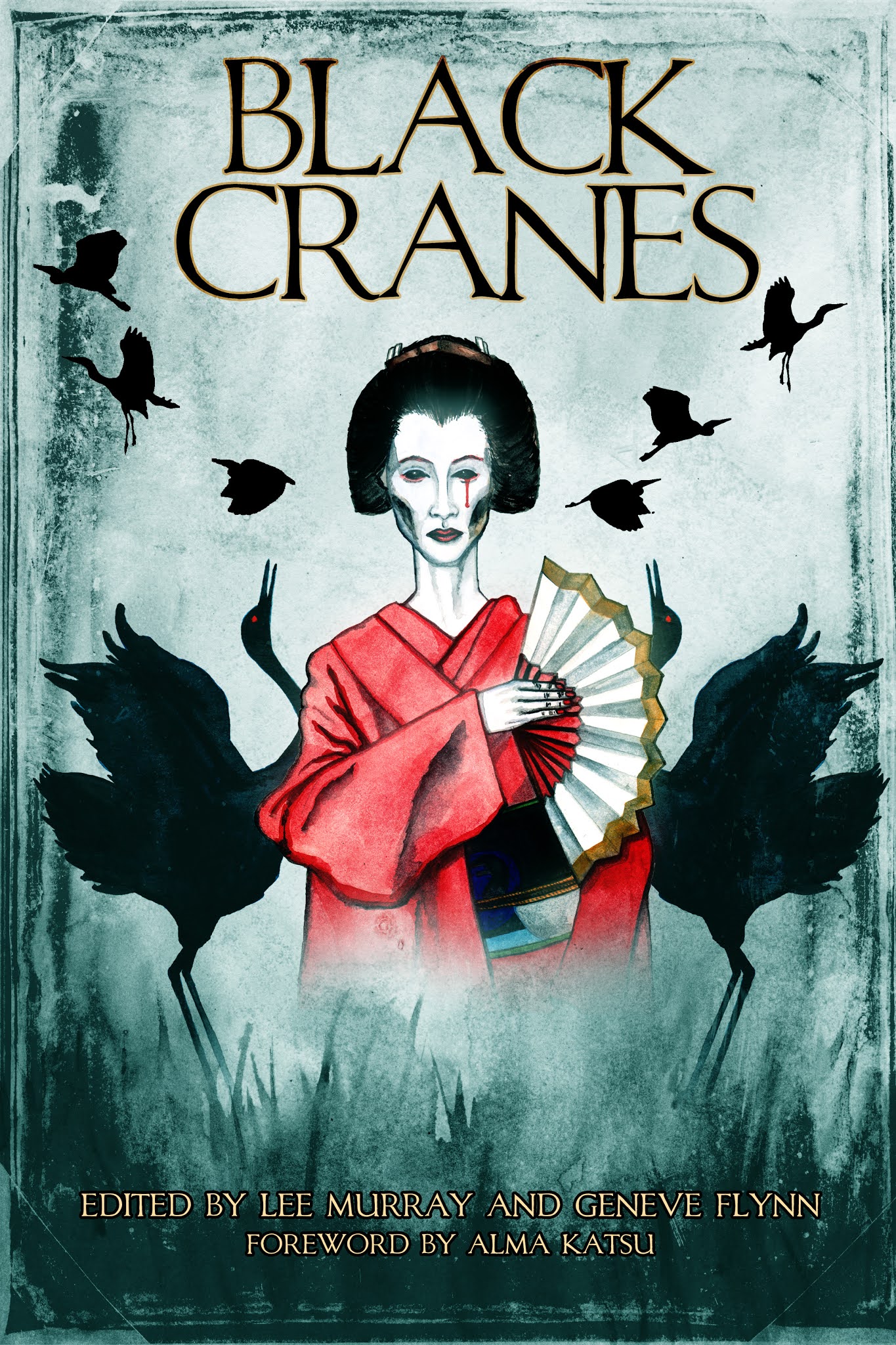


Thanks so much for asking. On the writing front, on 26 September 2020, Omnium Gatherum will release Black Cranes: Tales of Unquiet Women, edited with my Australian colleague Geneve Flynn, an anthology of fourteen wonderfully dark tales by some of my favourite horror writers, all of which reflect on the Southeast Asian experience of ‘otherness’. 


Then on 6 November 2020, Raw Dog Screaming Press will release Blood of the Sun, the third and final book in the Path of Ra series which I co-write with my Wellington colleague Dan Rabarts. There is a short film treatment coming together, and I have a story called The Good Wife, coming out in Weird Tales #364, which is super exciting because it seems I might be the very first New Zealander to appear in that iconic magazine. And finally, my works in progress include a short poetry collection and some new Taine McKenna tales. 


RIU: Thank you so much for taking the time to talk to us today. Much continued success! 


Thank you for having me stop by. It’s been a pleasure.


Lee Murray 
is a multi-award-winning writer and editor of science fiction, fantasy, and horror (Sir Julius Vogel, Australian Shadows) and a three-time Bram Stoker Award® nominee. Her works include the Taine McKenna military thrillers (Severed Press, Australia), and Kiwi supernatural crime-noir series The Path of Ra, co-written with Dan Rabarts (Raw Dog Screaming Press, USA), debut short fiction collection Grotesque: Monster Stories (Things in the Well, Australia), as well as several books for children and youth. She is proud to have edited fourteen speculative works, including award-winning titles Baby Teeth: Bite Sized Tales of Terror and At the Edge (with Dan Rabarts), Te Kōrero Ahi Kā (with Grace Bridges and Aaron Compton) and Hellhole: An Anthology of Subterranean Terror (Adrenaline Press, USA). She is the co-founder of Young New Zealand Writers, a group established to provide development and publishing opportunity for youth writers, and the Wright-Murray Residency for Speculative Fiction Writers, and she is HWA Mentor of the Year for 2019. In February 2020, Lee was made an Honorary Literary Fellow in the New Zealand Society of Authors Waitangi Day Honours. Lee lives over the hill from Hobbiton in New Zealand’s sunny Bay of Plenty where she dreams up stories from her office overlooking a cow paddock. Read more at www.leemurray.info @leemurraywriter


Tuesday, November 6, 2018

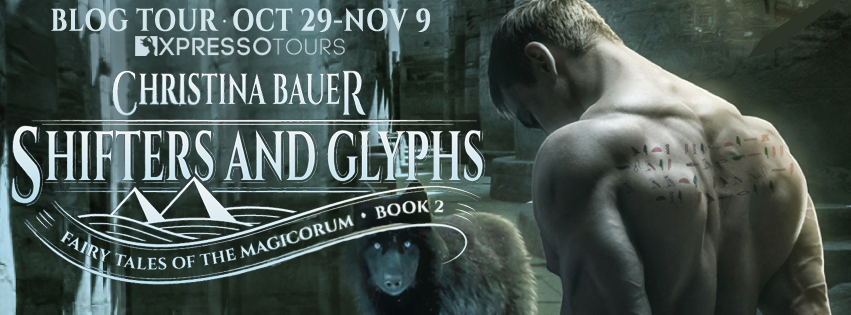
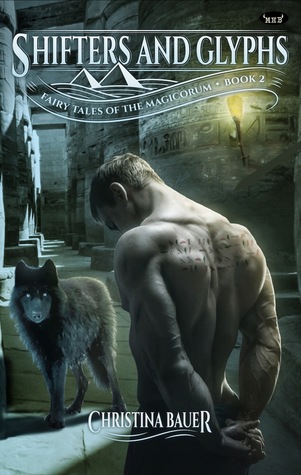
Interview, Blog Tour & Giveaway: Shifters and Glyphs: Fairy Tales of the MAgicorum - Book 2 by Christina Bauer (Paranormal, YA, Fairy Tales)


Shifters and Glyphs
Christina Bauer


(Fairy Tales of the Magicorum #2)
Published by: Monster House Books
Publication date: October 30th 2018
Genres: Paranormal, Young Adult
“A fun romp for Twilight Fans” – School Library Journal 
After being raised by the meanest fairies in the history of ever, Bryar Rose is now free to live her own life. For the first time, she’s attending West Lake Prep, a regular high school. Well, mostly regular. Some students are actually hidden members of the Magicorum. In other words, they’re really wizards, fairies, or shifters. Bry doesn’t mind, though. She’s thrilled to enjoy all the new experiences of being around normal kids her age, from locker pranks to lunchtime mystery meat. Everything is going along great, except for one thing.
Bry’s dreams about the pyramids of Egypt have gotten darker and more sinister. Every night, she sees her new man Knox and her best friend Elle in danger.
“Exciting and well-conceived” – Kirkus
With no other choice, Bry plans to leave school to explore the pyramids on her own. But her new man Knox discovers the scheme and is having none of it. He wants to stay by her side, no matter what. It’s a good thing too, because Bry must solve the mystery of her attraction to the pyramids and soon. Otherwise, it could cost the lives of those she loves most.
And that means not only Knox, but also her best friend Elle.
“Must-read YA paranormal romance!” – USA Today
Perfect for readers who love young adult books, contemporary fantasy, fairy tales, satire/comedy, paranormal romance, fairies, magic users, shapeshifters, and coming of age stories.

An Interview with Christina Bauer

As part of her launch tour for SHIFTERS AND GLYPHS, RIU recently interviewed series author Christina Bauer…

RIU: Hi, Christina! Welcome to Rising Indies United. Please tell us a little bit about yourself.
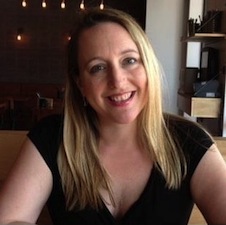
Thank you for having me here! To give a brief overview of yours truly, I live outside Boston, MA with my husband, son, and semi-insane golden retriever, Ruby. My interests span politics, history, film, and all forms of geekery. And let’s not forget books. Lots of books!

RIU: When did you first begin writing? Did you find it daunting or did you just jump in feet first?
I started writing stories when I was six years old. One of the things I had to discover about writing—or any passion that you decide to follow—is that you’ll hit a point where you suck. Hard. It’s at that moment that you decide whether or not to trust your passion and keep going. I wasn’t the best writer in college; not by a long shot! But I am a persistent one.

RIU: So, SHIFTERS AND GLYPHS is book 2 in your Magicorum series, can you tell us a little about these books, and what inspired you to write them?
When I was a child, I had a copy of the original GRIMM BROTHERS’ FAIRY TALES. Not the Disney version, mind you. I read the stuff where Snow White was a dumbass who just kept buying stuff from the evil queen until she ended up dead from magical shoes. (Yes, that really happened!) As a result, I’ve always wanted to reinterpret fairy tales. Fairy Tales of the Magicorum is set in a modern world where some folks live by a fairy tale life template that they adore, while others feel hampered by it. The stories grow out from there.

RIU: Why Young Adult as opposed to New Adult or Adult?
There’s an old curse that says: “may you live in interesting times.” Well, I had interesting teenage years. I can remember that period really well, and my writing keeps gravitating there. Maybe at some later point I’ll try other genre, but for now? I have a long list of YA ideas.

RIU: You also have two other series, Angelbound and the Dimension Drift books. Can you tell us a little about those?
Angelbound is about a teenage girl who’s part demon and fights evil souls in Purgatory’s arena. Dimension Drift follows a high school science prodigy who falls for a guy who may or may not be an alien. Both voices have plenty of sass, action, adventure, and romance. And kick-assery.

RIU: How have you grown as a writer?
Since my first book, I’ve learned how to trust my inner author and editor. Not sure if this is a girl-thing or a writer-thing, but one of my biggest concerns was always that I wasn’t good enough. Eventually, I thought: “What would I say if I were my best friend?” And I decided that I’d tell me I was awesome and could do it. So that’s what I did and here I am, if that makes sense J

RIU: Who have been your biggest supporters?
I’m forever grateful to my husband and son for their patience and support. I’ve also been very fortunate to work with a great distributor in both INscribe Digital and IPG.

RIU: Is it hard to balance family life and writing? Especially with a semi-insane Golden Retriever. LOL!
The golden retriever part has been awesome, thanks for asking!!! But balancing everything else has been a challenge. For the first five years of my writing, I kept both a day job and a hectic publishing schedule. Basically, I woke up at 4 or 5 am and wrote before work … then once I got home, I’d edit until after midnight. It was tiring. After about book 15, I reached what’s called ‘shelf strength’ which means I had enough run rate that I could ditch the day job. Now, life is MUCH more reasonable for both myself and my family. Ruby is happy as long as she gets treats.

RIU: What do you feel is the hardest part of writing? What is the best part?
The hardest part of writing is always nailing the first third of any manuscript. That’s tough for me because I always think I have that shit DOWN, but then I read everything again the next day and I’m like: DAMN, I have to tear this apart. Once I read for 4-5 days in a row without any major changes, then I know I’m golden. That’s when the best part happens and I just write like I’m taking dictation.

RIU: Who has been your biggest influence?
JRR Tolkien and The Lord of The Rings. I read that series in high school, back when there really wasn’t a fantasy genre. It opened my eyes to a different kind of storytelling.

RIU: What is your writing process?
I start with Pinterest boards for inspiration on characters and places. Then I develop the people and worlds with character sheets, which basically list out 100 things you need to set up about something (appearance, history, and so on). After that, I map out how I’ll blow those people apart in three to five books. Once all that work is done, I’ll start the writing process proper. Book 1 in any series is always the hardest.

RIU: What advice would you give a new writer?
It’s okay to suck. Seriously. Even Shakespeare sucked at one time. Keep reading, writing, and believing. The stories in your heart can only be released by you.

RIU: If you could have dinner with any 5 writers (dead or alive) who would they be and why?
1.      Edith Hamilton – wrote my favorite book on Greco-Roman Myth. I would love to talk gods and goddesses with her
2.      Joseph Campbell – wrote my fav series on the hero’s journey. Same thing.
3.      Karl Jung – Created the ideas of archetypes that are threaded through literature and seriously influenced Campbell
4.      JRR Tolkien – would want to talk about how he created his own freaking languages for his books. WTF?
5.      Oscar Wilde – This is one seriously sarcastic dude. I’d just want to sit next to him while he verbally skewered everyone else.

RIU: What can we expect from you in the future?
I’m working on a new YA series called THE PIXIELAND DIARIES. This is going to be all fluff, all fun, all the time.

RIU: Thank you for taking the time to talk to us today, Christina. We wish you much continued Success!
Thank you for inviting me. I had a great time!


Author Bio:
Christina Bauer knows how to tell stories about kick-ass women. In her best selling Angelbound series, the heroine is a part-demon girl who loves to fight in Purgatory’s Arena and falls in love with a part-angel prince. This young adult best seller has driven more than 500,000 ebook downloads and 9,000 reviews on Goodreads and retailers. The first three books in the series are now available as audiobooks on Audible and iTunes.
Bauer has also told the story of the Women’s March on Washington by leading PR efforts for the Massachusetts Chapter. Her pre-event press release—the only one sent out on a major wire service—resulted in more than 19,000 global impressions and redistribution by over 350 different media entities including the Associated Press.
Christina graduated from Syracuse University’s Newhouse School with BA’s in English along with Television, Radio, and Film Production. She lives in Newton, MA with her husband, son, and semi-insane golden retriever, Ruby.


XBTBanner1